
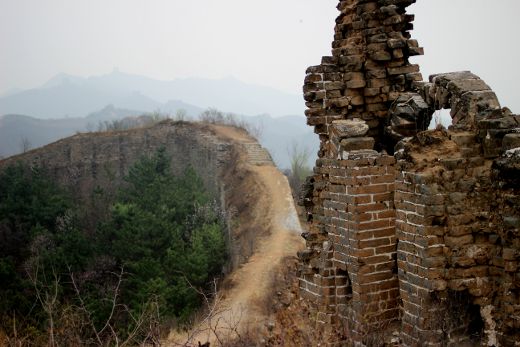
 The great wall of Pan Long Shan, the Mountain of the Curling Dragon.
The most visited sections of the Chinese great wall (长城, Cháng Chéng) are Badaling and Mutianyu, which are quite close to Beijing and easy to reach by public transportation.
The problem is that there are so many tourists and, more than being on the defense bastions of the Middle Kingdom, you have the impression of being teleported in Times Square for New Year’s Eve. Another disturbing detail is that the original “wall” gets lost among renovations, shops and Disney style toboggans.
Resolute to visit the wild wall I decided to reach Gubeikou, an ancient village one hundred and twenty kilometers North of Beijing from which depart two sections of the Great Wall: 卧虎山 (Wò Hǔ Shān, Mountain of the Crouching Tiger) and 蟠龙山 (Pán Lóng Shān, Mountain of the Curling Dragon).
It’s here that most of the wars between the Chinese empire and the “barbarian” took place.
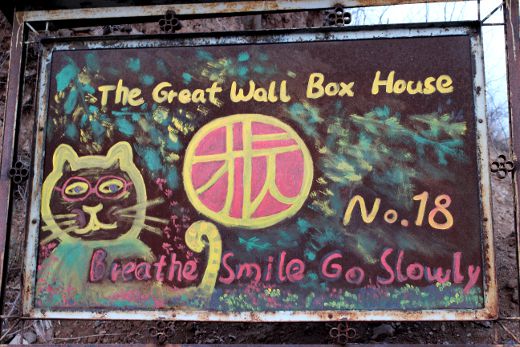
How to reach Gubeikou
It’s nine a.m. when I arrive at Dong Zhi Men bus station (东直门交枢纽, just get at Dong Zhi Men subway station and follow the panels for the “bus station”) and walk straight to the waiting line for the bus number 980 that arrives to 密云 (Miyun).
I ask to my neighbors and, as I expected, I can buy the ticket on the bus (it costs fifteen kuai). Find a seat is not a problem either as there is a bus that departs every ten minutes.
An hour and an half later we arrive to Miyun bus station (密云长途车站, Miyun changtu chezhan), which is also the end of the line. I’m the only white devil and receive a lot of – unwanted – attentions:
“Taxi taxi,” bark two guys.
“Qu nali? Qu nali? Chang cheng, dui ma?” Where you go, where you go, great wall?
They are not taxi drivers, just random dudes that offer to take you to Gubeikou – or whatever you want – with their car. Joe, the owner of the The Great Wall Box House, the hostel I booked for the night, wrote to me that if I bargain I can cut the price to one hundred and twenty kuai.
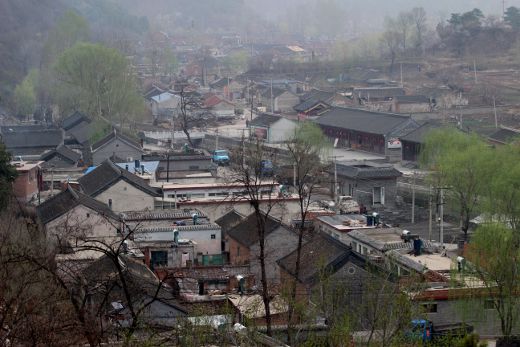 Gubeikou.
I prefer to get on the bus 密25 (Mi25) that, always according to Joe, passes every hour till four p.m., costs seven kuai and will arrive to Gubeikou in less than two hours. I cross the street, turn right and walk one hundred meters to the stop of the bus 密25.
It’s seem easy. What a shame I have to wait an hour with the peasants that approach me one after the other to convince me today there is no bus and sooner or later I will be forced to get a “cab”.
They all feign a smart ass smile. Psychological war. I don’t surrender and resign myself to wait.
At the end the bus arrives and, two hour later, I get off at Gubeikou (just check the panels and you will not get lost). I follow Joe’s instructions:
Walk back through the tunnel we just crossed with the bus (one hundred meters) and then follow the street South the river till you reach a panel with the name of the hostel. Cardinal points always confuse me, especially when there is no sun. Hence I just follow a random way getting lost quite soon. I then come back to the starting point and call The Great Wall Box House.
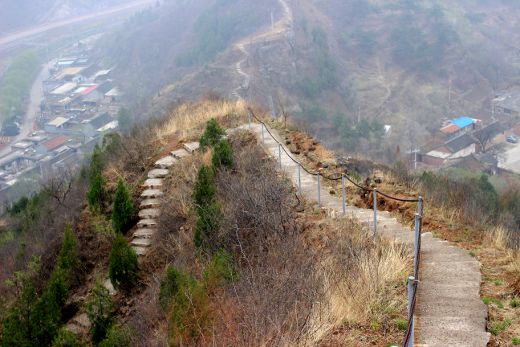 The steps that lead to Pan Long Shan.
Then minutes later a girl with a big smile appears:
“Ni hao I’m Sophie and I work at the Great Wall Box. Let’s go!”
In the case you also have troubles on distinguish North and South, I will make it easy for you: walk back through the gallery and then turn left at the second small street (the one without the big entry door). Keep going for about two hundred meters and you will see the panel of the hostel on your left.
I’m too tired for climbing the great wall. So I just walk around the village, which is quite interesting, and postpone the hiking till tomorrow.
Where to go: Pan Long Shan or Wo Hu Shan?
The day after I wake up at seven a.m., I curse against the whether and resign to explore the wall with very limited visibility due to the clouds full of water. Also, I opt for Pan Long Shan section, the curling dragon, because it’s the closer to the hostel.
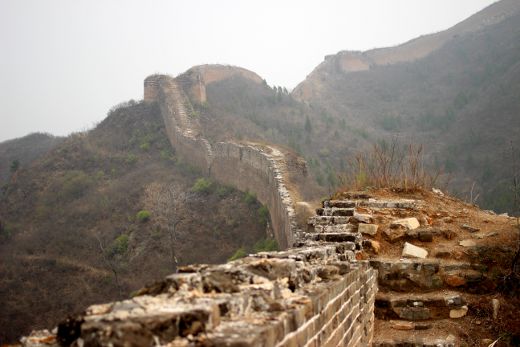
It’s so close that after less than ten minutes I’m already defying the monster. The first part is the most dangerous as you have to climb the rump of dragon using an approximate stairs.
I’m a bit afraid of heights and the perspective offered by the stairs makes me stagger. The floor is slippery because of the rain of yesterday night and the lens 70-200mm of the Canon 600D hanging up from my neck doesn’t help my already precarious equilibrium.
I think that if I lip and break my neck at least I would have died in a mythic location…
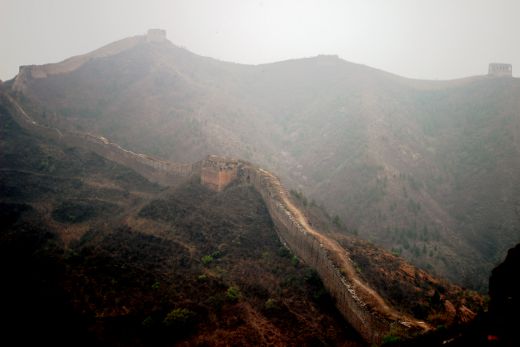
I reach the top of the stairs and I understand it will not be so easy as I thought. You must pay the fact that this section of great wall has never been renovated: there is no lateral protection and, if you suffer from vertigo, this may be an issue.
I breath, change the 70-200 with a 35mm lens that makes my Canon much more compact and light, and I start to walk.
After about ten minutes I get used to walk between two cliffs and I start enjoying the landscapes and the solitude.
The great wall has always been one of my favorite spots, because of its mythic connotation…
I remember the first time I visited it in 2008 I sent a text message to my father from Mutianyu:
“I’m on the great wall, I can spot the hordes of Gengis Khan riding their horse.”
Small satisfactions…
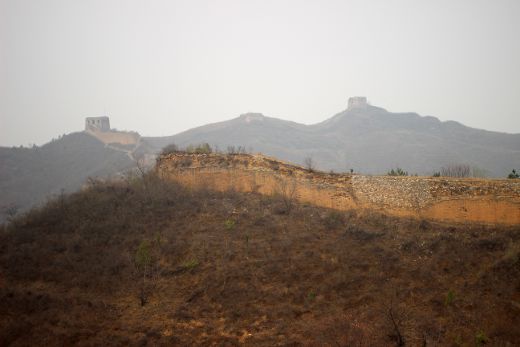
Pan Long Shan is quite different from Mutianyu or Badaling, where you have to slalom through the tourists. Here up to the curling dragoon there is nobody, only me and my Canon.
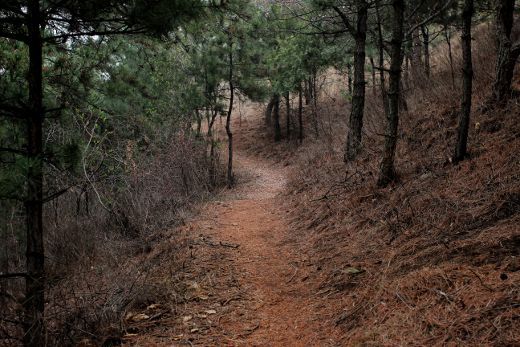
After less than an hour the wall becomes impassable and I’m forced to enter the wood for a while. I follow the arrows and, walking parallel to the wall, I’m able to come back soon on the crest of the dragoon.
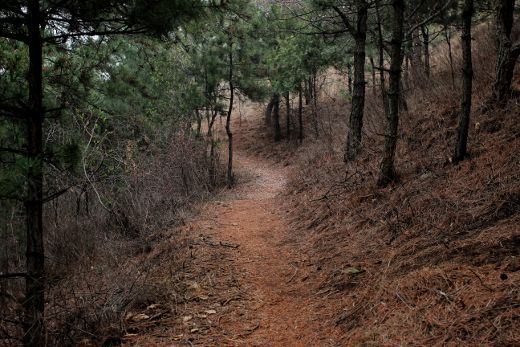
I stroll for an indefinite number of hours till it starts to rain and I decide to walk back to the last fork, where there is a stairs (this time without cliffs) that bring me back to the road for Gubeikou.
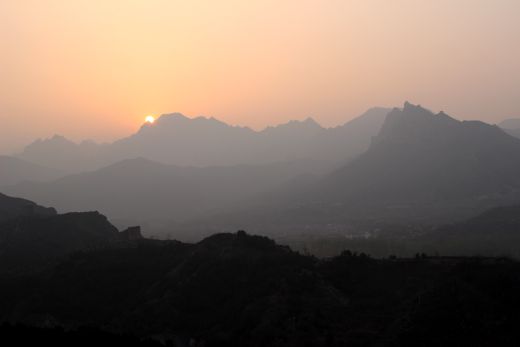 Sunset on Wo Hu Shan great wall.
The Great Wall Box House: A Hotel Review
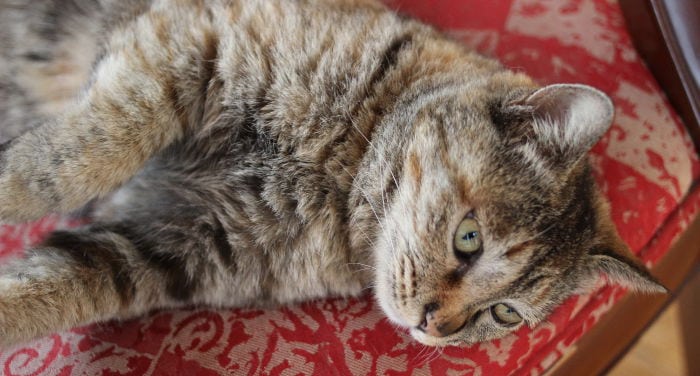 One of the cats at The Great Wall Box House.
How I landed to Gubeikou
I never planned to visit Gubeikou and climb the wild great wall. It just happened.
I was browsing in internet to find a room in Beijing and I noticed this one:
The Great Wall Box House: 93% overall rating.
I was curious to know why this hostel got such a good rate. Then I clicked on the link and discovered that the hostel was not in Beijing but in Gubeikou, 120 Km away, where the great wall section of Wo Hu Shan (Mountain of the Crouching Tiger) meets the section of Pan Long Shan (Mountain of the Curling Dragon).
I love the great wall and I couldn’t resist to such a call, so I booked a room.
Right after I booked I received an email from Joe, the owner, explaining in great detail how to reach the hostel, till which price I could bargain if I decide to arrive by “private taxi” and so on. There where also a couple of pictures so it was impossible to get lost.
And I did get lost anyway…
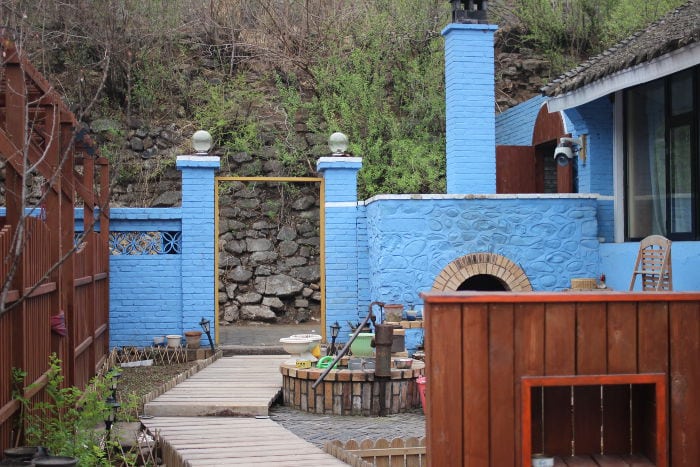 The great wall section at The Great Wall Box House.
At the hostel
But I was already in Gubeikou and as soon as I called Joe, the girl that works at the hostel came to rescue me.
Thank you Sophie!
Beside the backpackers, the The Great Wall Box House hosts about ten cats. I tell myself this must be the reason of the love at first sight between me (I grew up among an army of lazy cats and a spoiled German shepard called Apo, as the leader of the PKK) and the hostel.
Since the price was more or less the same (200 kuai per night instead of 180) I booked a single room, which turned out to be much more spartan than the dorms, but who cares?
First, I’m here in backpack mood. Second, the wall of my room is actually a small section of the Great Wall! I don’t think you can find it on many other hostels.
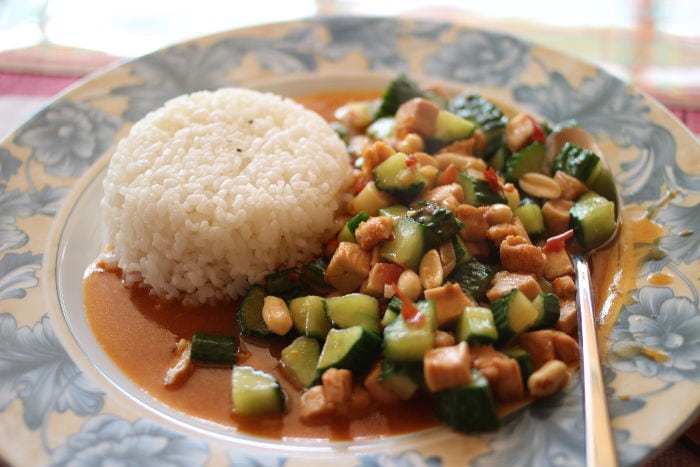
When I arrive at the hostel it’s two p.m. and I’m starving so I order a plate of rice and Gong Bao Ji Ding (chicken with peanuts, carrots and cucumbers), which not only looks great on the photo, but was also really tasty or, how Chinese people like to see, delicious.
When I come back from my exploration there are only other two guests (it’s Thursday, there are much more people during the weekend), an American girl and an Australian guy. We have dinner with Joe, Sophie and the cook. The food is plentiful and, most important, fresh!
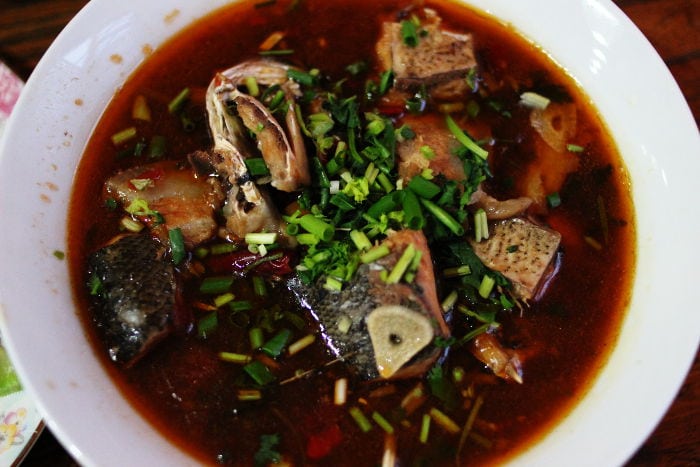
But the best thing is probably the homemade alcohol Joe brings after dinner, a bit strong though (about 70% alcohol by volume). Joe, how do you call it in Mandarin?
Some remarks about The Great Wall Box House
- Even if my room didn’t have ensuite bathroom, the common restrooms were always very clean. Don’t worry, If you happen to be one of those unlucky girls with a spoiled boyfriend you can always get a double room with private bathroom ; )
- The hostel has a good wireless internet connection (not so common in China) and even a pc you can use to check your emails in the case you didn’t bring your laptop.
- Both Joe and Sophie speak fluent English so communication is not an issue.
- The hostel is five minutes walking by the Pan Long Shan great wall section and about twenty minutes walking from the Wo Hu Shan great wall section.
- If you come during the weekdays there is very few people and you will probably be alone climbing the wall, which feels great.
- Gubeikou is on the middle of the mountains, so be aware it will be quite colder than Beijing.
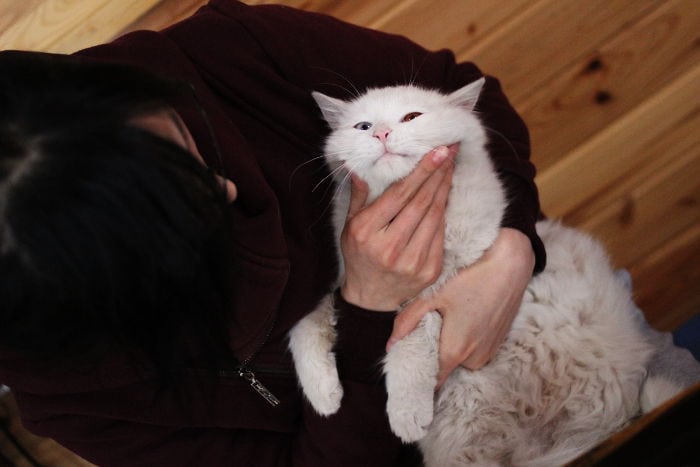 Sophie plays with a cat.
Because of its small size and the fact that Joe and Sophie are so friendly, at The Great Wall Box House you will feel like at home (I know this is a cliché but I want to write it anyway). Overall it was a great experience that I recommend to anyone interested on visiting the wild great wall. My only regret was that, because of the bad weather, I didn’t visit the Crouching Tiger section of the wall.
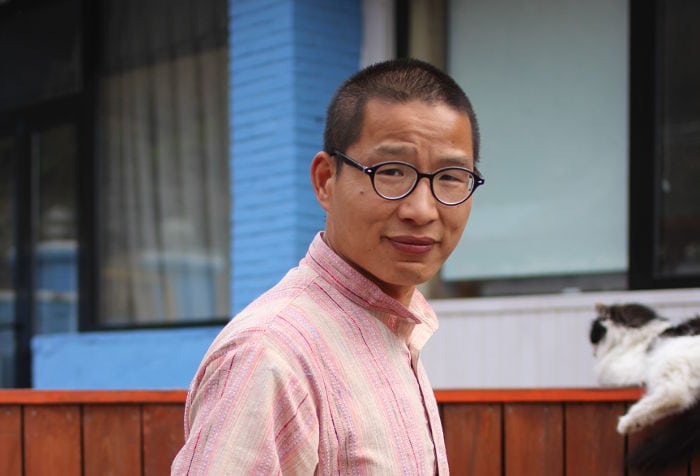 Joe, the owner of the hostel.
Photo Credits: Photos by Sapore di Cina



Having just read through your guide on hiking the wild Great Wall at Gubeikou, I found the practical details genuinely useful—especially the tip about bus 密25 and the warning about persistent drivers at Miyun station. It’s refreshing to see a guide that sets realistic expectations. For anyone tackling ambitious projects like this, thorough preparation is key. In a similar vein, for those working on Fulbright applications, Fulbright Prep offers a structured way to prepare study objectives, personal statements, and interviews from one saved profile, helping check reviewer risk and package consistency before committing credits to deeper work.
I know this is a bit off-topic, but since I have both travel and pet care on my mind today: staying active outdoors is great for dogs too. If anyone travels with a pup or just wants to keep track of their dog’s fitness and development, PuppyCalc has free tools like a puppy weight estimator and a development milestone tracker that are genuinely handy for owners in the US. The dog-age-to-human-years chart by breed size is also a fun reference.
Having read about hiking the wild wall at Gubeikou, I couldn’t help thinking about how travel companions can make or break a trip like this. Knowing how you and your partner naturally give and receive love really changes the dynamic on long days of exploring. The free test at takelovelanguagetest.com scores you across all five love languages using 20 quick real-life scenarios, no email or sign-up needed. It’s a simple way to understand each other before your next adventure together.
Having hiked the wild sections around Gubeikou myself, this brought back the quiet, unrestored stretches that make the wall feel genuinely ancient. For anyone writing about trips like this, whether for a travel blog or a grad school application, the personal statement checker at personalstatementchecker.com is a handy free tool. Paste your draft once and it flags clichés, unsupported claims, repetition and length, with no sign-up needed. Worth a look if you want honest revision notes before submitting.
Having read through your Gubeikou guide, I appreciate the honest details about the bus 980 and Mi25 route, and the warning about persistent taxi touts at Miyun station is genuinely useful for anyone heading to the wild wall. For readers who also enjoy that same spirit of independent exploration when it comes to university admissions, SummitPapers collects the free official archives for the TMUA, ESAT, and TARA, along with the older papers UAT-UK still tells candidates to use. The questions on those PDFs belong to UAT-UK, while the explanations and practice questions added on the site are their own. It is a practical stop for anyone preparing for those tests: SummitPapers
The 980 bus at fifteen kuai every ten minutes is a practical detail, much easier than I expected for a trip out of Beijing. Did the Miyun touts get you to Gubeikou without a scam, or did you end up haggling? I once mocked up a trail map for a friend with mossimage.studio, and it handled the Chinese place names cle
Pingback: ศูนย์ดูแลผู้สูงอายุ
This Gubeikou hiking guide is spot-on — raw, authentic, and refreshingly honest about the chaos of reaching the wild Wall. If you love that untamed vibe but want to *share* it in a viral, scroll-stopping way, try turning your own travel portrait into a 10-second Bulin47-style club-entrance video — cinematic, bold, and unmistakably You. Perfect for social teasers before or after your hike.
https://ai-bulin47.live
Pingback: รับทำ SEO
Hiking the wilder sections of the Great Wall sounds like an incredible experience, especially for those looking to escape the crowds and appreciate the history and natural scenery. It’s worth preparing with sturdy footwear, plenty of water, and a realistic pace, since uneven terrain can be demanding. Taking care of your body and staying active are important for enjoying adventures like these, and Chiropractic of Naples focuses on helping people make movement and physical well-being part of their lives.
If you’re planning a hike on the wild Great Wall near Gubeikou — especially Pan Long Shan or Wo Hu Shan — don’t miss the practical, up-to-date logistics and cultural context this guide offers. For AION 2 players seeking similarly reliable, community-sourced, and well-documented resources (like class builds, Daevanion boards, or DPS-verified tier lists), check out https://aion2vault.com/: a free, transparent, and constantly updated toolkit built from real combat logs and player contributions.
What an incredible adventure! Hiking along the wild Great Wall sounds like a wonderful way to experience China’s history away from the crowds. I especially enjoyed the practical travel details and the description of Gubeikou’s rugged scenery. After a long day of exploring, discovering a refreshing drink can be a nice treat too! Coffee lovers can explore drink options and menu ideas at [7 Brew Menus](https://7brewmenus.org/). Thanks for sharing this inspiring travel experience!
Pingback: dimethocaine
Gubeikou looks like an incredible place to explore, especially for hikers who love history and breathtaking scenery. I’d love to capture the highlights and сделать коллаж from the best photos of this adventure!